



Thanks to Jaws, great white sharks are among the most feared predators to patrol the oceans. In reality, these misunderstood animals are critical to ocean health and incredibly humbling to witness in the flesh. Off the coast of Baja Mexico, Guadalupe Island offers the best great white shark cage diving on the planet. Perfect for divers and non-divers alike, here are the top reasons to dive with great whites.

Table of Contents:
- Challenge Your Perception
- The Ocean’s Top Predator
- Unique Animal Behavior
- Incredible Photo Opportunities
- Become a Citizen Scientist
- Unforgettable Encounters
- The Next Stop on Your Shark Adventure
1. Challenge Your Perception
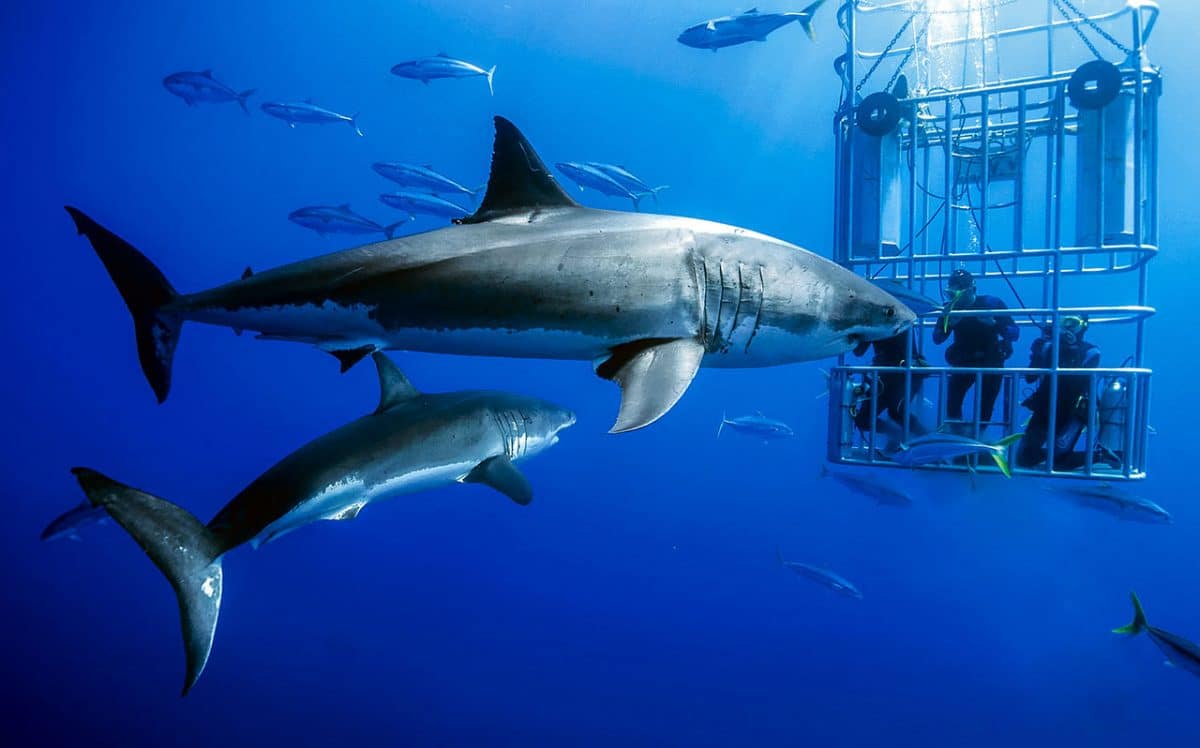
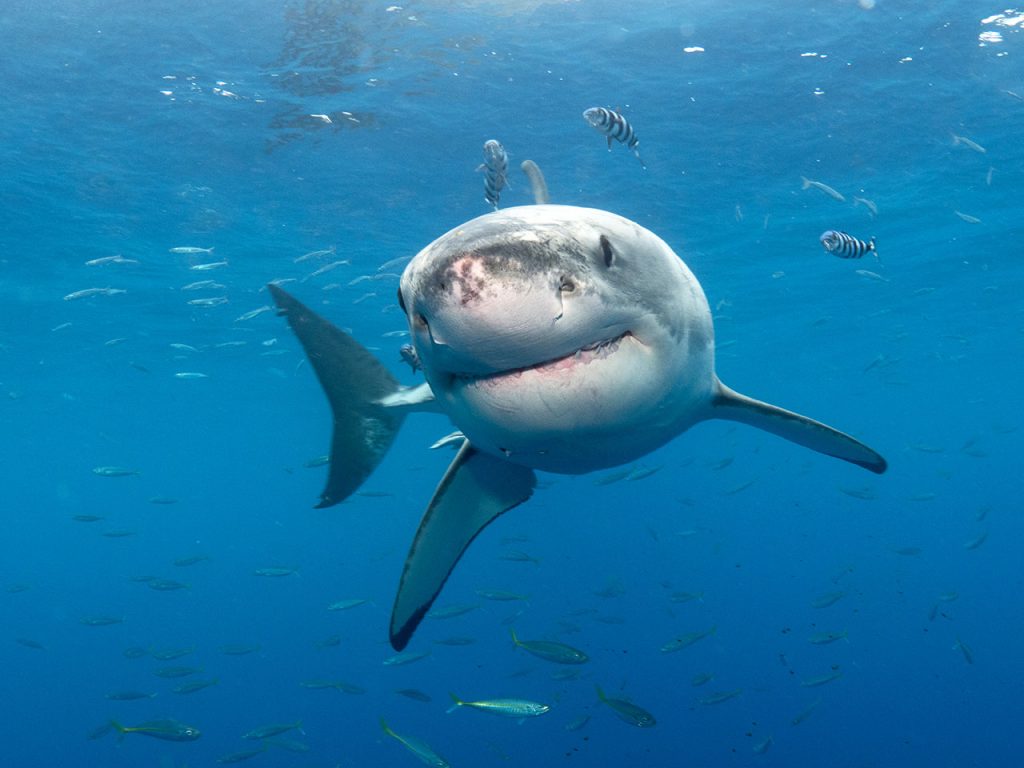
Seeing your first great white can be a spine-tingling experience. These predators can reach over 19 ft or a whopping six metres in length. That’s about one-and-a-half times as long as a Volkswagen Beetle! Once you’ve become accustomed to their size, you’ll start to notice and admire their beautifully streamlined movements as they power through the water.
There are currently 366 sharks identified around Guadalupe, and each one has been named (two of our favourites are Lucy and Joker, you can read more about their personalities here). Look closely, and you might be able to identify each shark by their unique characteristics. If you’re lucky, you might even make eye contact with them through the cage. Did you know that white sharks have startling blue eyes?
2. See the Ocean’s Top Predator in Action
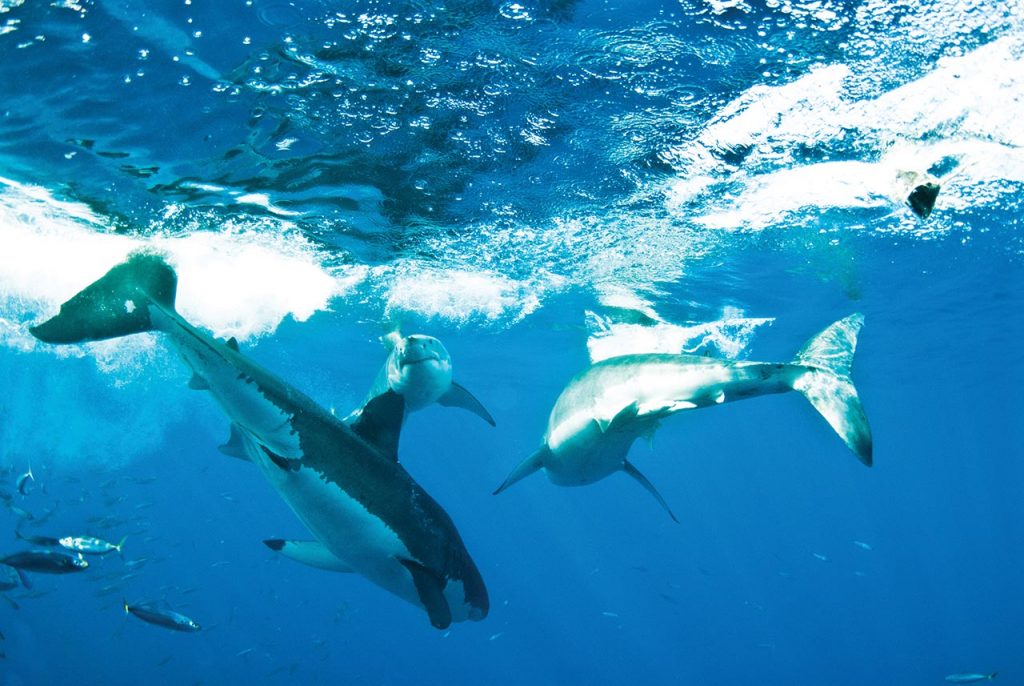
One of evolution’s great success stories, great whites’ torpedo-shaped bodies help propel them through the water in quick bursts. In addition, they have 300 teeth arranged in seven rows, can detect tiny electromagnetic signals given off by animals, and can even smell a single drop of blood in 100 liters of water, making them the perfect predators. We offer unlimited time in our surface cages, and up to four dives a day in our submerged cages, meaning virtually limitless opportunities to see these sharks in action.
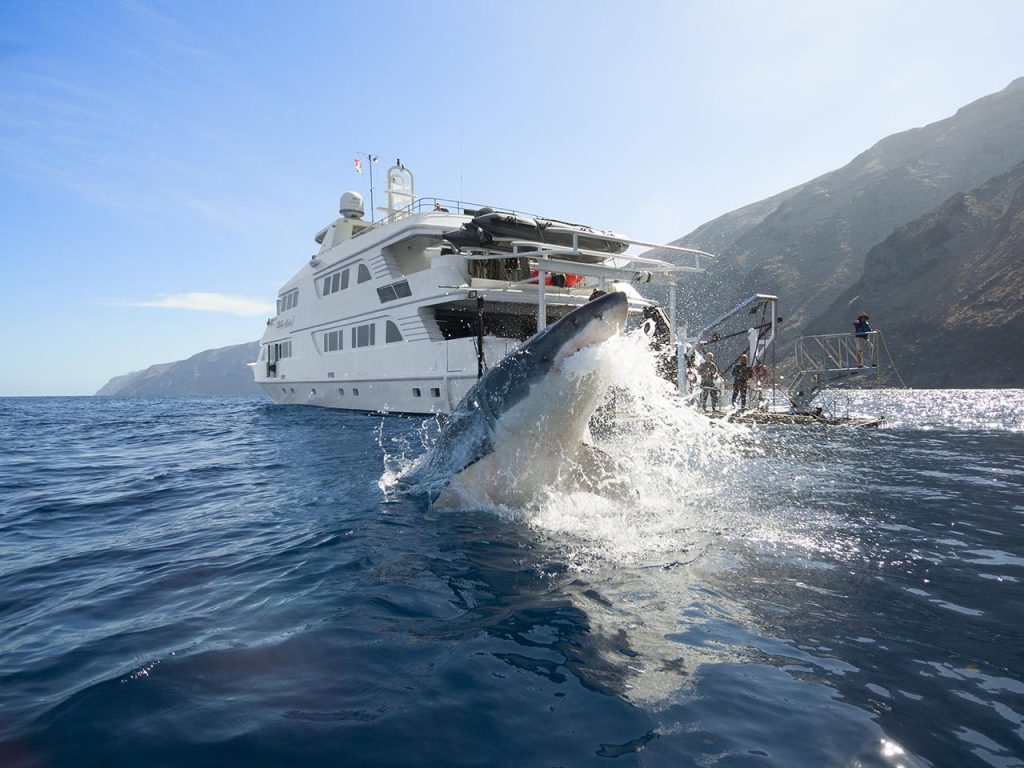
White sharks usually position themselves beneath their target, often breaching out of the water as they catch their prey, so you can also get a front row seat to the action on the deck of our liveaboards.
3. Unique Animal Behavior
From May through June, male great whites return to Guadalupe, averaging 3.4 to 4.0 metres (11 to 13 feet) in length. By July and August, the bay is alive with male sharks of all ages and sizes competing for dominance — not unlike a rowdy gang of teenage boys on spring break! Come September, the females begin to arrive, and between October and November, you’ll witness these awe-inspiring giants take over. At an average of 15–16 feet, the females are comparatively massive, second in size only to the whale shark.
And while Guadalupe delivers unforgettable encounters with great whites, the nearby Sea of Cortez offers something very different: swimming alongside whale sharks, the ocean’s largest and most gentle giants.
The Ultimate Whale Shark Adventure in the Sea of Cortez is a trip of a lifetime. The diving is amazing with a lot of sea lion action with a good mixture of some of the most beautiful reefs I have ever seen. Then comes the highlight, the whale sharks. You have plenty of opportunity to swim with these majestic creatures in an intimate setting unlike other tourist spots.“
Johnny (Liveaboard Guest), September, 2024
4. Incredible Photo Opportunities
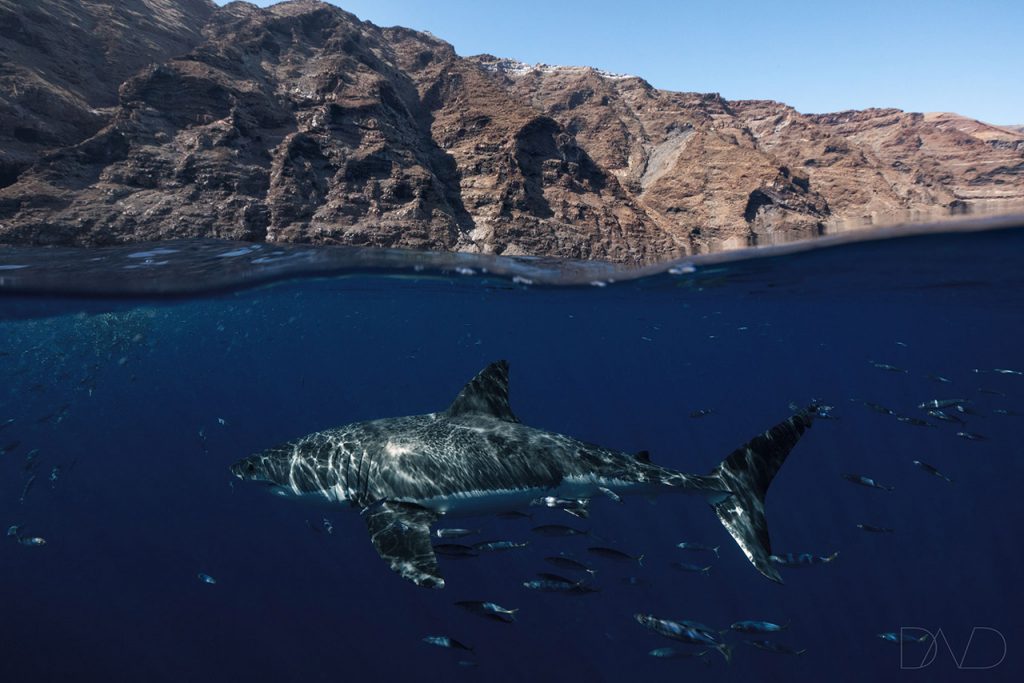
Guadalupe has all the right ingredients for the perfect photo, stunning subjects with beautiful, topaz blue water and visibility up to 150 ft (45m). We anchor in a calm, protected bay (no seasickness here!), and with such still water, it’s like looking through a glass window to the action. Insider tip: keep your camera on hand when on deck and follow the sharks’ movements below as they shoot up through the water and breach.
Stop by SeeCreatures Cabo before your trip, and we’ll give you our top tips for capturing the perfect shot on our complimentary Backscatter photography workshop.
5. Become a Citizen Scientist
While we’re on the topic of photography, your holiday snaps can actually help with shark conservation. Despite being a top predator, the great white shark is classified as vulnerable. Their conservation is critical for ocean health, and you can help in their protection by documenting your encounters through photography. Scientists can use your photos to identify sharks visiting the bay. This helps to understand their movements and, therefore, how to protect them.
If you identify a new shark in the area, you may even be asked to name it! Read our blog on white sharks to learn more about how great white conservation is integral to the ocean.
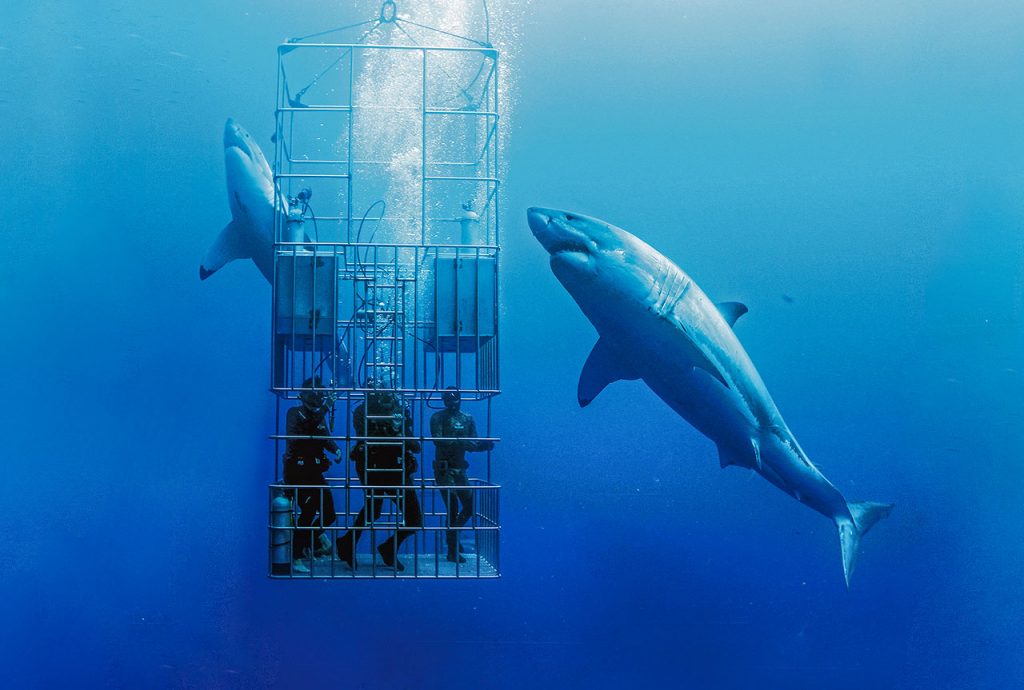
6. Unforgettable Encounters: The World’s Best Great White Diving
By now, you’ll know that Guadalupe’s clear, calm waters make it perfectly suited to dive with great white sharks. But what makes this corner of the world so incredible is the sheer number of great white sharks you can see. We’ve seen as many as 13 at once, and our record is 50 different individuals over three days of diving! The icing on the cake? Our surface and submerged cages make this trip perfectly suited to both divers and non-divers. So everyone can experience unforgettable encounters with the world’s greatest predators.
The Next Stop on Your Shark Adventure
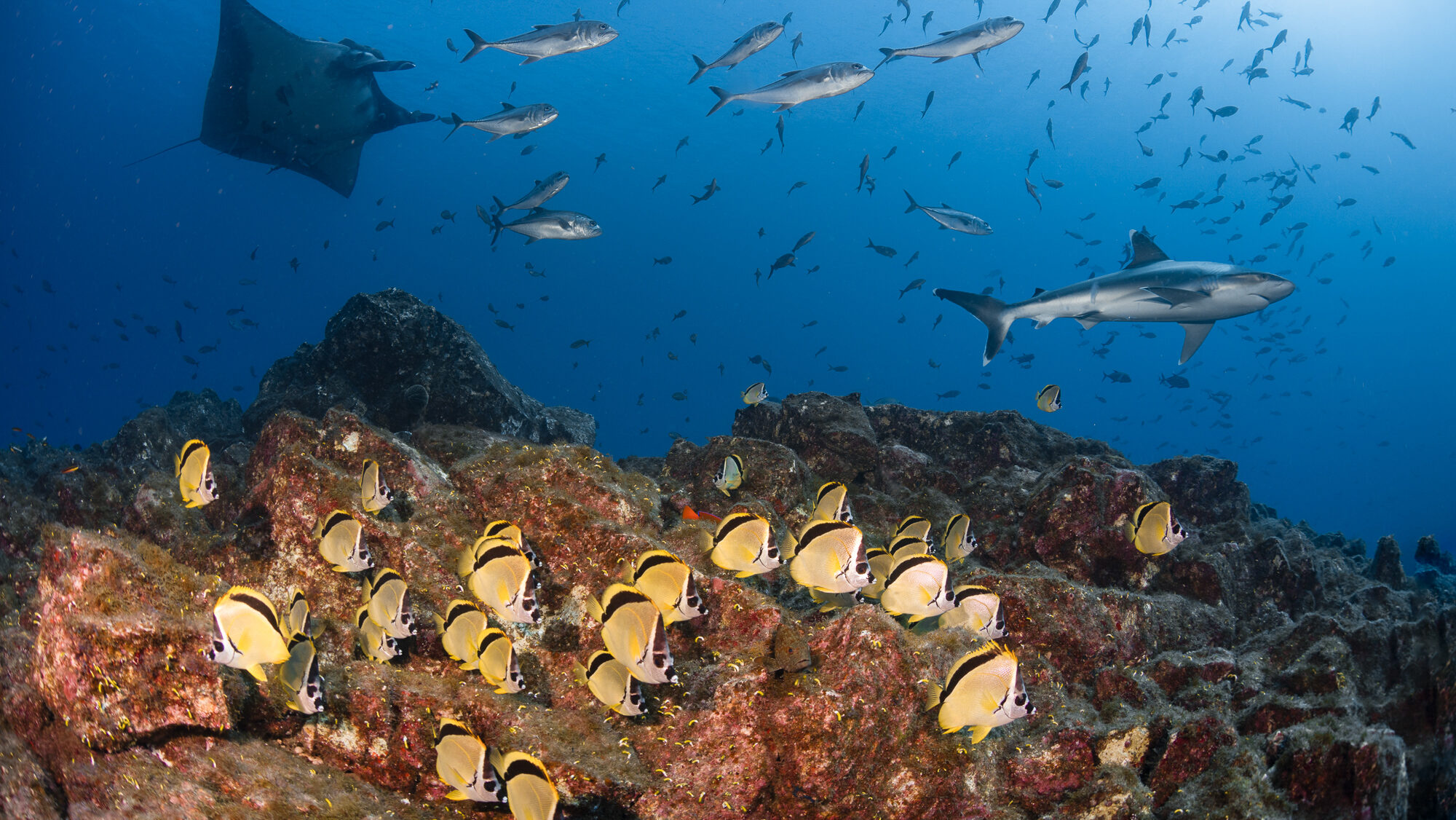
For divers who can’t get enough of the ocean’s top predators, Socorro offers the chance to see multiple shark species in one trip. This includes schooling hammerheads, silkies, Galapagos sharks, and even imposing tiger sharks. Add the chance of close-ups with oceanic manta rays and dolphins, and it’s easy to see why so many adventurers return again and again.
Related Reading: ‘Incredible Marine Life of the Socorro Islands’
Want to dive with great white sharks? Get in touch to join us on a once-in-a-lifetime voyage to Guadalupe Island.
Video credit: Adil Schindler
Image credit: Dan Orr, Oliver Jahraus & Petra Brummel, Adil Schindler, Brian Biondi