

There are dive trips… and then there is a Socorro liveaboard.
Far offshore in the wild Pacific, the Socorro Islands (also known as the Revillagigedo Archipelago) rise dramatically from deep water. These volcanic pinnacles are famous for big animals, electric-blue water, and encounters that don’t just fill your logbook… they stay with you, forever.
A liveaboard is the only way to truly experience this remote destination. From the moment you leave Cabo San Lucas behind, you feel the adventure take hold. The one-day crossing builds anticipation. Friendships form quickly with your fellow divers. Your gear is prepped. The crew is ready. The marine life is waiting.
On a Socorro liveaboard, you’re not just going diving, you’re heading into one of the most dynamic pelagic ecosystems on Earth.
👉 Learn more about Socorro’s inhabitants in our recent blog, ‘Incredible Marine Life of the Socorro Islands’.
Big Animals. Bigger Moments.
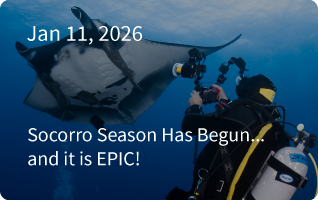
Socorro diving consistently delivers encounters that feel almost unreal. The area is known for its giant oceanic mantas, which often interact with divers. Regular reports describe mantas hovering inches away, making eye contact, looping gracefully overhead.
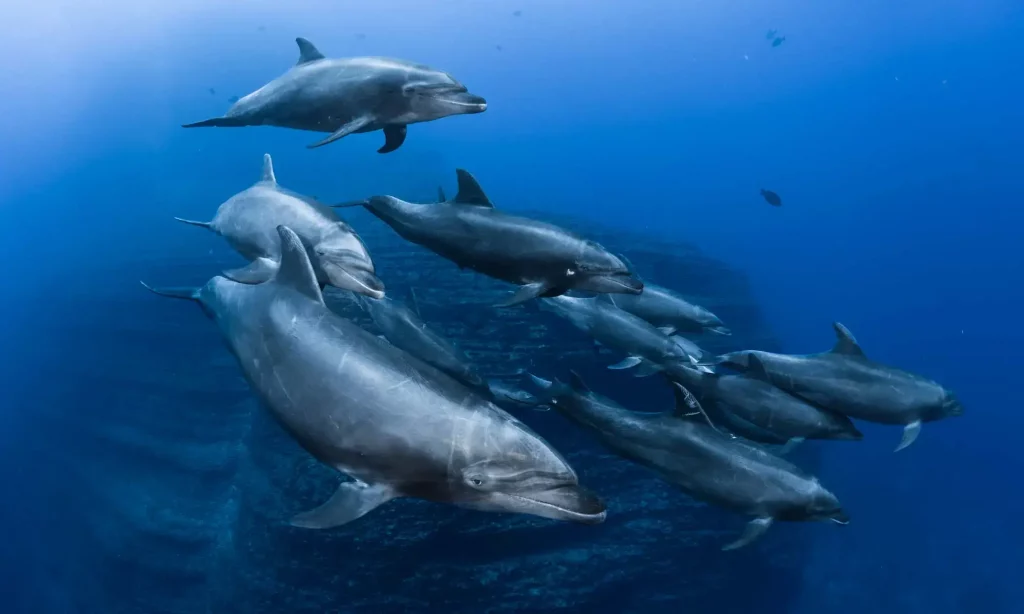
And it doesn’t stop there. Bottlenose dolphins frequently race in to investigate divers. Silky sharks shimmer in the blue. On the right day, you may hear the distant song of humpback whales vibrating through the water column. Every dive feels like a discovery.
Simone and Steven, visiting from Alberta, described their recent experience aboard the Nautilus Belle Amie as:
“Another trip of a lifetime! It is difficult to put into words the experiences we have had over the last few days. Socorro diving delivered all that was promised and more.”
At El Cañon, one of Socorro’s most iconic sites, they were surrounded by schooling sharks in staggering numbers.
“El Canyon was a highlight with mantas and over 100 sharks. I stopped counting at 23 hammerheads.”
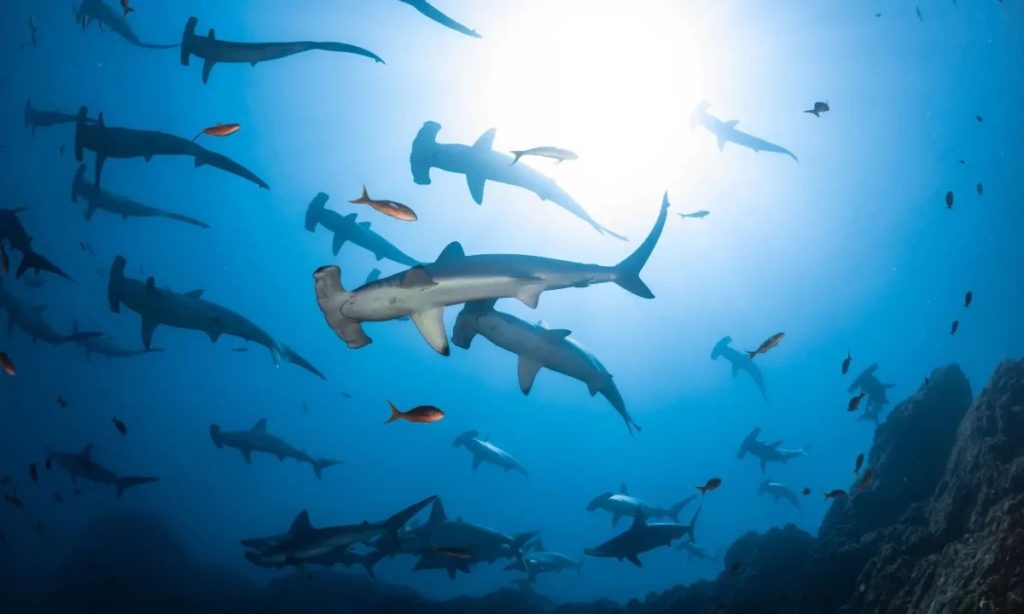
This is what makes a Socorro liveaboard extraordinary. Galapagos sharks cruise the cleaning stations. Silvertips and whitetips patrol the reef. Hammerheads glide through the blue in formation. And then there are the giant oceanic mantas — known for their intelligence and curiosity.
Imagine hanging weightless at 15 feet while a manta with a wingspan wider than you are tall circles gracefully overhead. These aren’t fleeting sightings. Often, they linger. They seem as curious about you as you are about them.
“Seeing a giant black manta at the safety stop was breathtaking.”
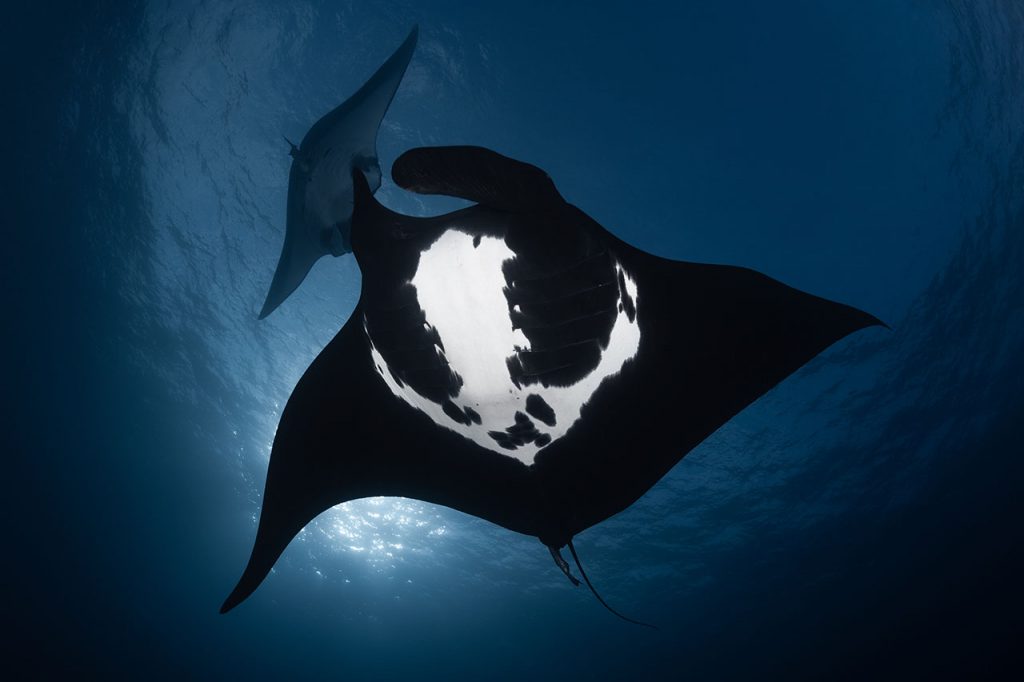
Curious about how individual mantas are identified and named?
Find out how two newly discovered manta rays earned the unusual names of Springroll and Wu-Tang!
👉 ‘From Diver to Citizen Scientist: Giant Manta Edition.’
Socorro Liveaboard: Above and Below the Surface
The magic doesn’t end when you climb back onto the dive deck.
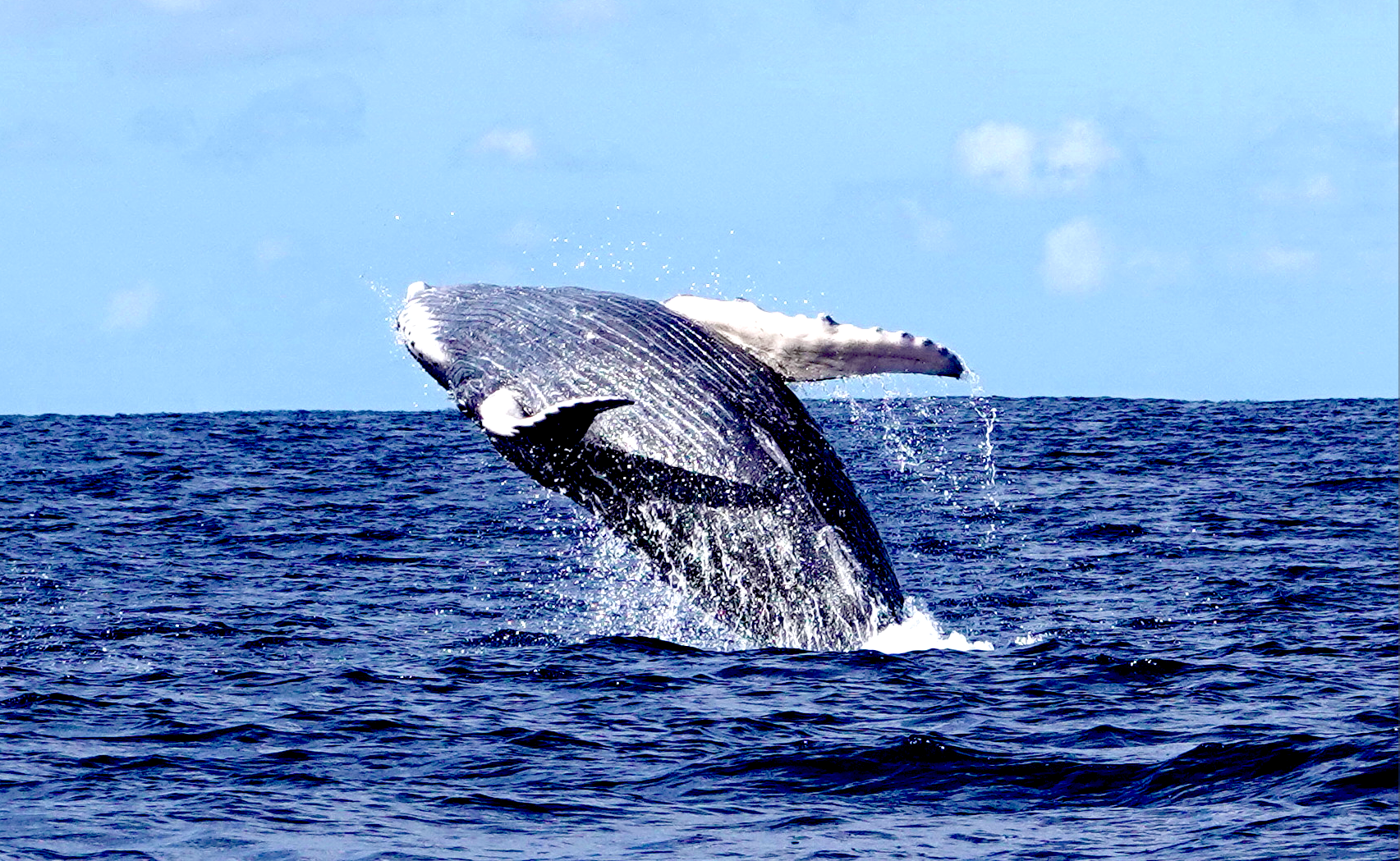
“Humpback whales breaching while we were on deck was another highlight.”
On a Socorro liveaboard, the ocean is alive at every moment, whether you’re submerged with dolphins or watching whales breach against a glowing Pacific sunset.
Leslie, guest aboard the Nautilus UnderSea, captured that feeling perfectly:
“This is my first trip to Socorro, and I am blown away!! In the first two days, we have already seen many species of sharks (Galapagos, white tip, silver tip), majestic giant mantas, playful dolphins, and a whale shark.”
And beyond the wildlife, it’s the balance of professionalism and experience that elevates everything.
“The dive guides have also been amazing, allowing us to dive independently when we feel comfortable, but also readily available when needed. This is such a magical place. It feels like a gift to be here.”
That balance is key. Professional dive teams, experienced captains, and thoughtfully designed vessels ensure you can focus on what matters: being present in the moment.
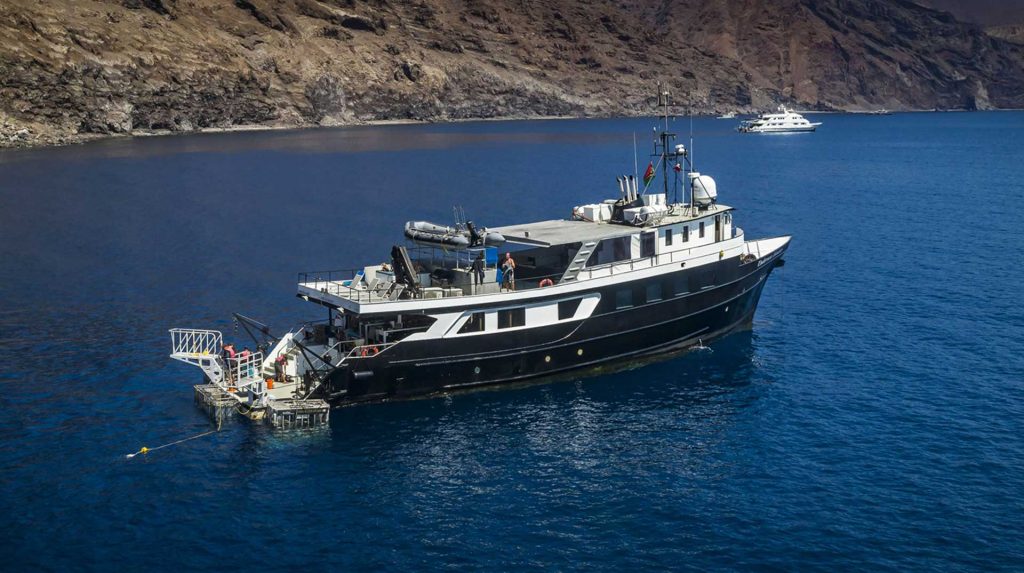
Why Choose Nautilus for Your Socorro Liveaboard?
With decades of experience exploring these waters, Nautilus Liveaboards has helped shape Socorro into one of the world’s premier big-animal diving destinations. Their vessels are purpose-built for comfort and safety, and their crews are known for professionalism, warmth, and passion for the ocean.
This isn’t a rushed itinerary. It’s a carefully curated expedition. Multiple dives at iconic sites like Roca Partida and Cabo Pearce allow for meaningful wildlife interactions rather than fleeting glimpses.
So the question isn’t just “Why Should I Dive Socorro?”
It’s: Are you ready for the kind of dive trip that changes the way you see the ocean?
A Socorro liveaboard is more than a vacation. It’s a shared adventure into the blue — graceful mantas, playful dolphins, and unforgettable moments. Here, every descent holds possibilities.
If you’re craving big animals, open ocean, and a true sense of exploration, Socorro is waiting.
Frequently Asked Questions
1. When is the best time to go to the Socorro Islands?
Socorro liveaboard season typically runs from November through May. This is when divers have the best chances of encountering giant mantas, multiple shark species, dolphins, and migrating humpback whales.
2. What experience level is required for Socorro diving?
Socorro is considered an advanced destination due to open-ocean conditions and occasional strong currents. Most operators recommend Advanced Open Water certification and recent experience in blue water or current diving.
3. What marine life can I expect to see?
Divers regularly encounter giant oceanic mantas, Galapagos sharks, silvertips, whitetips, scalloped hammerheads, bottlenose dolphins, and sometimes whale sharks. Humpback whales are often seen from the boat during peak season.
4. Can you hear whale song while diving in Socorro?
Yes — during humpback whale season (typically January through March), divers sometimes hear whale song underwater. While sightings usually happen from the boat, the sounds of whales can travel for miles through the water.
5. Is a liveaboard the only way to dive Socorro?
Yes. The Socorro Islands are located over 250 miles offshore, making liveaboards the only practical and safe way to access the dive sites.
6. How many dives per day are offered on a Socorro liveaboard?
Most itineraries include up to four dives per day (conditions permitting), allowing multiple opportunities at iconic sites like El Cañon and Roca Partida.
7. What are conditions like underwater?
Expect blue-water descents, depths typically between 40–100 feet (12–30m), and varying currents. Visibility often ranges from 60–100+ feet, depending on conditions.
8. Why choose Nautilus for a Socorro liveaboard?
With decades of experience operating in the region, Nautilus offers purpose-built vessels, seasoned crews, detailed dive briefings, and a strong safety culture—ensuring both adventure and peace of mind.